
Recent News & Highlights
- [Oct 2026] Received the 2026 IEEE Best Land Transportation Paper Award from the IEEE Vehicular Technology Society for "Multi-Agent Deep Reinforcement Learning to Manage Connected Autonomous Vehicles at Tomorrow's Intersections", published in IEEE Transactions on Vehicular Technology (Vol. 71, No. 7, pp. 7033–7043, July 2022). [Paper]
- [Apr 2026] Joined Uber AV Labs as a Senior Machine Learning Engineer to work on Foundation Models and long-tail data curation.
- [Feb 2026] Released "Deep-Flow", a novel unsupervised framework for AV safety validation. It leverages Optimal Transport Conditional Flow Matching on a Spectral Manifold to detect "long-tail" semantic anomalies with an AUC-ROC of 0.77. [Paper] [GitHub]
- [Apr 2026] Accepted by TMLR: "Semantic-Drive" — Trustworthy and Efficient Long-Tail Data Curation via Open-Vocabulary Grounding and Neuro-Symbolic VLM Consensus. [OpenReview] [Paper] [GitHub] [Live Demo]
- [Sept 2025] Our two new benchmarks for validating complex AI systems, DCcluster-Opt (SustainCluster) and LC-Opt (SustainLC), accepted to the NeurIPS 2025 Datasets and Benchmarks Track.
-
[Aug 2025] New Research Stream: Advancing Autonomous Driving AI.
- Developed "Efficient Virtuoso," a state-of-the-art latent diffusion Transformer for goal-conditioned trajectory planning, achieving minADE of 0.25 on Waymo Open Motion Dataset. [Paper] [GitHub]
- Submitted new research on "Mining the Long Tail" for robust Offline RL in AVs to arXiv, demonstrating significant safety improvements via data curation. [Paper] [GitHub]
- Submitted new research on "From Imitation to Optimization" for Offline RL in AVs to arXiv, demonstrating 3.2x higher success rates than BC baselines. [Paper] [GitHub]
- [Early 2025] Initiated a new research stream at HPE exploring LLM-based agents for dynamic system control.
- [Nov 2024] Our work on Hierarchical RL, GreenDCC, accepted to the AAAI 2025 Demonstration Track.
- [Oct 2024] Our MARL benchmark, SustainDC, accepted to the NeurIPS 2024 Datasets and Benchmarks Track.
- [May 2024] Filed a new U.S. patent on "Real-Time Carbon Footprint Reduction Controller".
- [Dec 2023] Received the Best ML Innovation Award at the NeurIPS 2023 Climate Change AI Workshop.
- [Sep 2022] Joined HPE AI Labs as an AI Research/Applied Scientist.
- [Jun 2022] Awarded Ph.D. in Computer Science with Cum Laude distinction.
About Me
I am a Senior Machine Learning Engineer at Uber AV Labs. I focus on building the Foundation Models and intelligent systems needed for safe, large-scale autonomy. My work combines deep research with production-grade engineering:
- Generative AI & Safety: My research centers on Generative World Models and Flow Matching to solve the "long-tail" data problem. I use my Ph.D. background in Reinforcement Learning and Imitation Learning to create robust decision-making systems for complex driving environments.
- Large-Scale Engineering: I design and implement the infrastructure required to process petabyte-scale vehicle logs. I am an expert in building distributed training pipelines using PyTorch and Ray to turn raw sensor data into high-quality training sets.
- Neuro-Symbolic VLMs: I specialize in using Vision-Language Models (VLMs) to automate data curation and safety validation. By combining symbolic grounding with cognitive reasoning, I build tools that help autonomous systems understand and navigate rare real-world scenarios.
Featured Projects
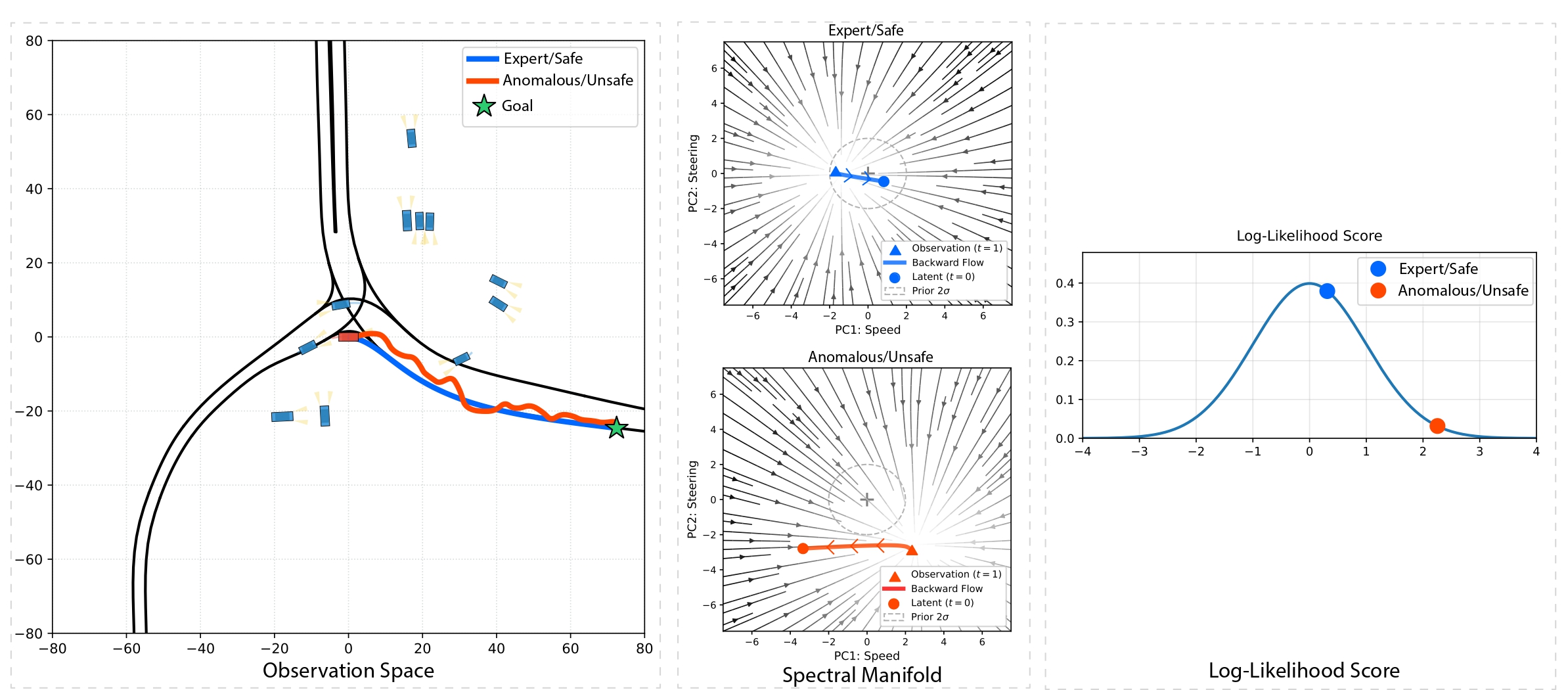
Manifold-Aware Flow Matching: Detecting anomalies via exact likelihood estimation.
Latent Flow Dynamics (Click to expand)
Deep-Flow: Unsupervised Safety Validation via Conditional Flow Matching
Built a physics-informed generative framework to detect "unknown unknown" safety anomalies in L4 autonomous driving. Replaces brittle heuristics with Exact Log-Likelihood estimation using Optimal Transport Conditional Flow Matching (OT-CFM) on a spectral manifold.
My Key Contributions:- Engineered a Spectral Manifold Bottleneck (PCA-12) to enforce kinematic smoothness and enable deterministic, exact Jacobian trace computation (avoiding stochastic estimators).
- Designed a Goal-Conditioned Early Fusion Transformer with direct intent skip-connections to resolve multi-modal ambiguity at complex intersections.
- Implemented a Parallel Eager Loader to process 300k Waymo scenarios in-memory, maximizing A100/3090 GPU throughput.
- Identified the "Predictability Gap": Proved that semantic violations (e.g., illegal turns) can be detected as statistical outliers even without high kinematic energy.
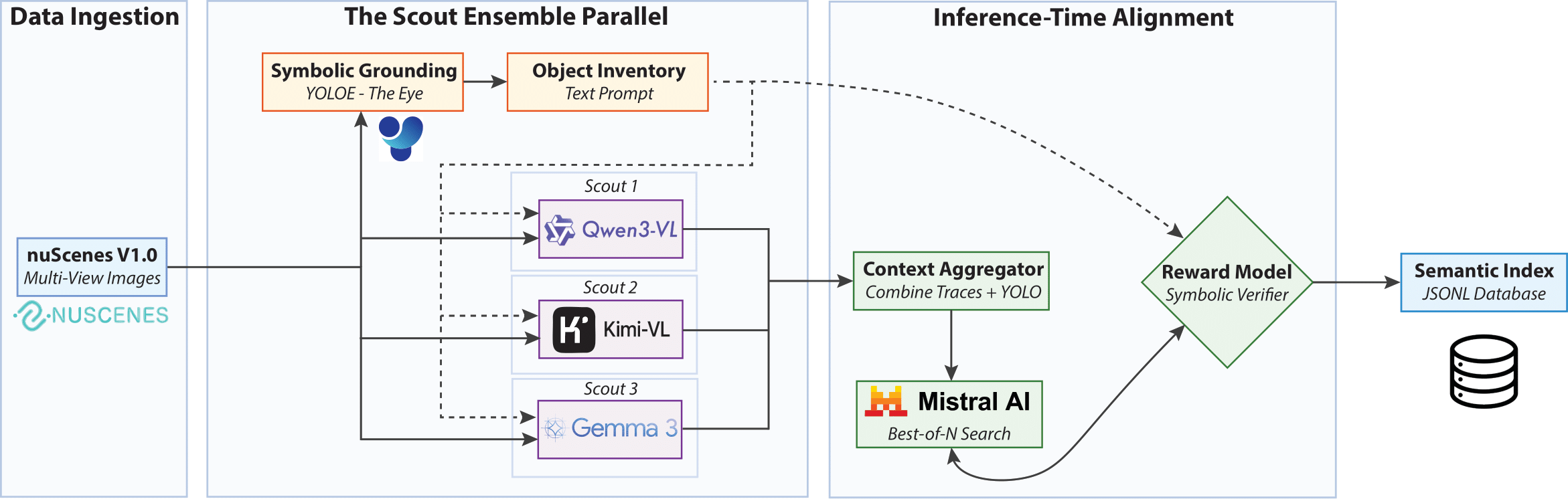
Neuro-Symbolic "Judge-Scout" Pipeline running locally on RTX 3090.
System Architecture (Click to expand)
Semantic-Drive: Neuro-Symbolic VLM Mining for "Dark Data"
TMLR AcceptedAccepted by TMLR, this privacy-preserving, local-first DataOps engine mines long-tail edge cases (e.g., erratic VRUs, sensor failures) from raw video logs. It implements a "System 2" inference strategy using YOLOE-11 for grounding and Qwen/Mistral for reasoning.
My Key Contributions:- Designed a Neuro-Symbolic architecture that reduces VLM hallucinations by 51% via "Skepticism Policy" prompting.
- Implemented an Explicit Outcome Reward Model for inference-time consensus (Best-of-N search).
- Operationalized the WOD-E2E taxonomy into a structured JSON schema for automated causal analysis.
- Released a full open-source stack (Streamlit UI) that runs on consumer hardware.
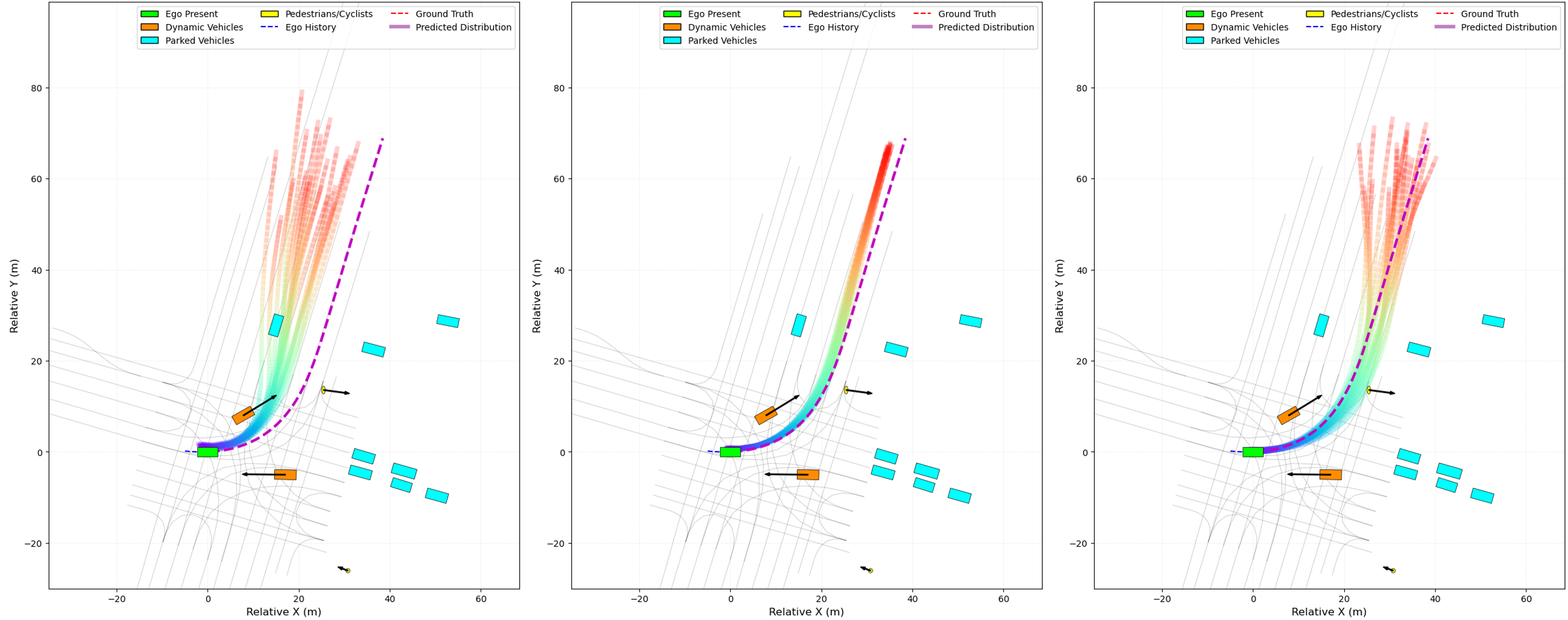
Our Sparse Route model (right) generates highly unbiased precise trajectories, outperforming other goal representations.
Qualitative comparison of goal representations in a challenging turning scenario. (Click to expand)
Efficient Virtuoso: Latent Diffusion Transformer for Trajectory Planning
Developed a state-of-the-art conditional latent diffusion model for goal-conditioned trajectory planning, achieving a \textbf{minADE of 0.25} on Waymo Open Motion Dataset. Introduced novel normalization and provided key insights into optimal goal representation for AVs.
My Key Contributions:- Pioneered a two-stage normalization pipeline for stable latent diffusion training.
- Designed a Transformer-based StateEncoder for rich scene context fusion.
- Conducted rigorous ablation on goal representation, proving multi-step routes are critical for tactical precision.
- Achieved state-of-the-art minADE of 0.25 on WOMD.
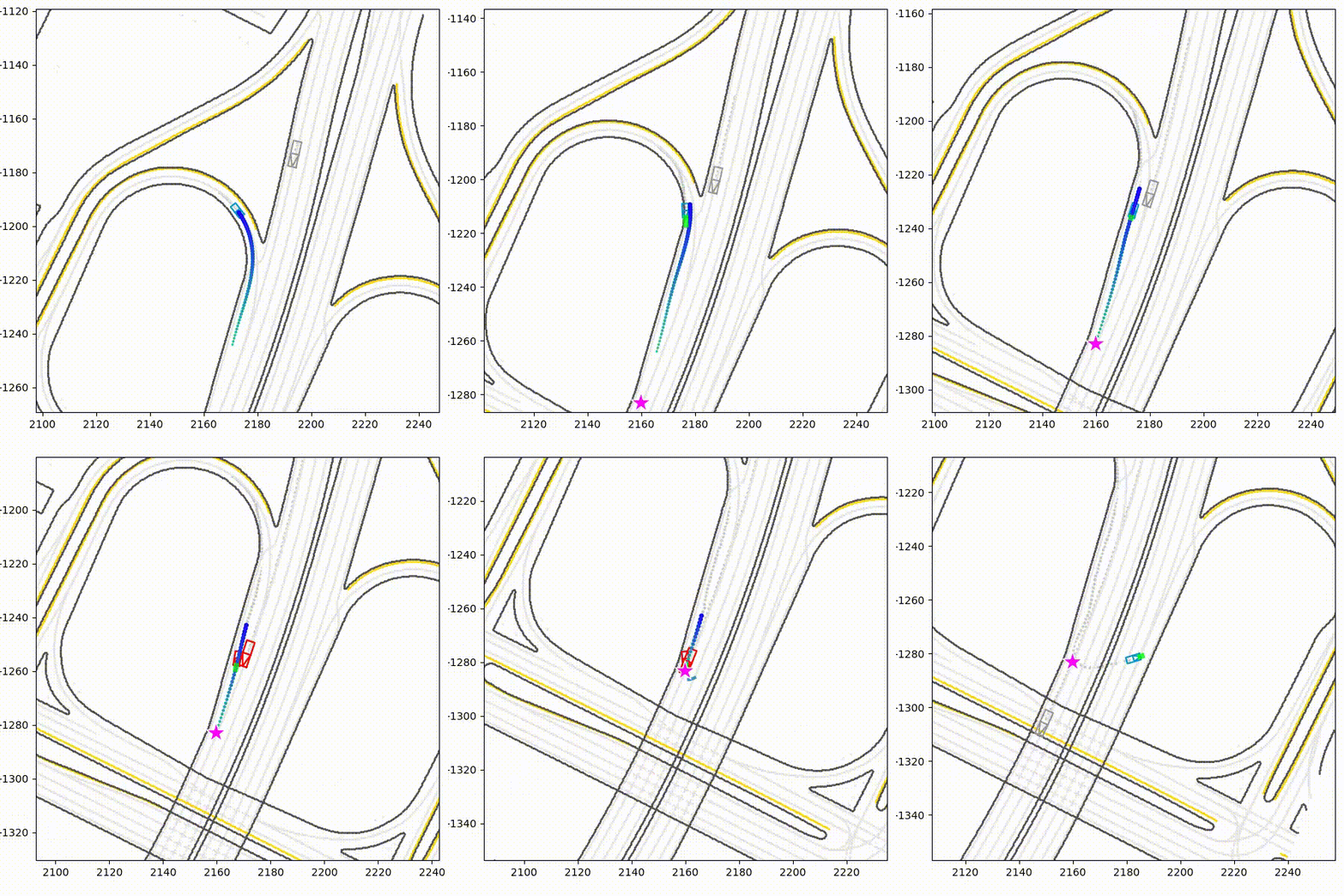
Baseline CQL: Collision in merge scenario.
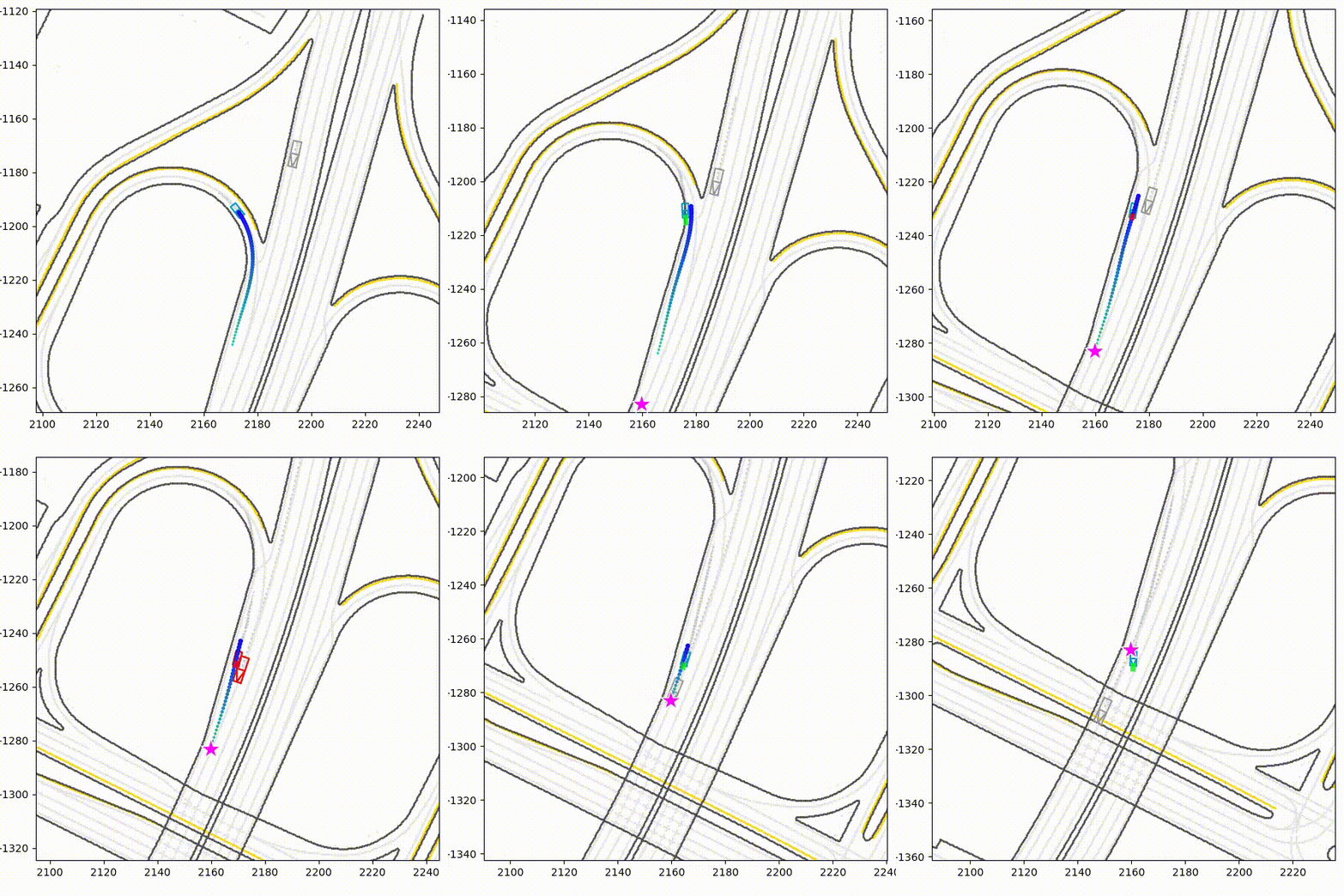
Heuristic-Weighted: Suboptimal, reactive merge.
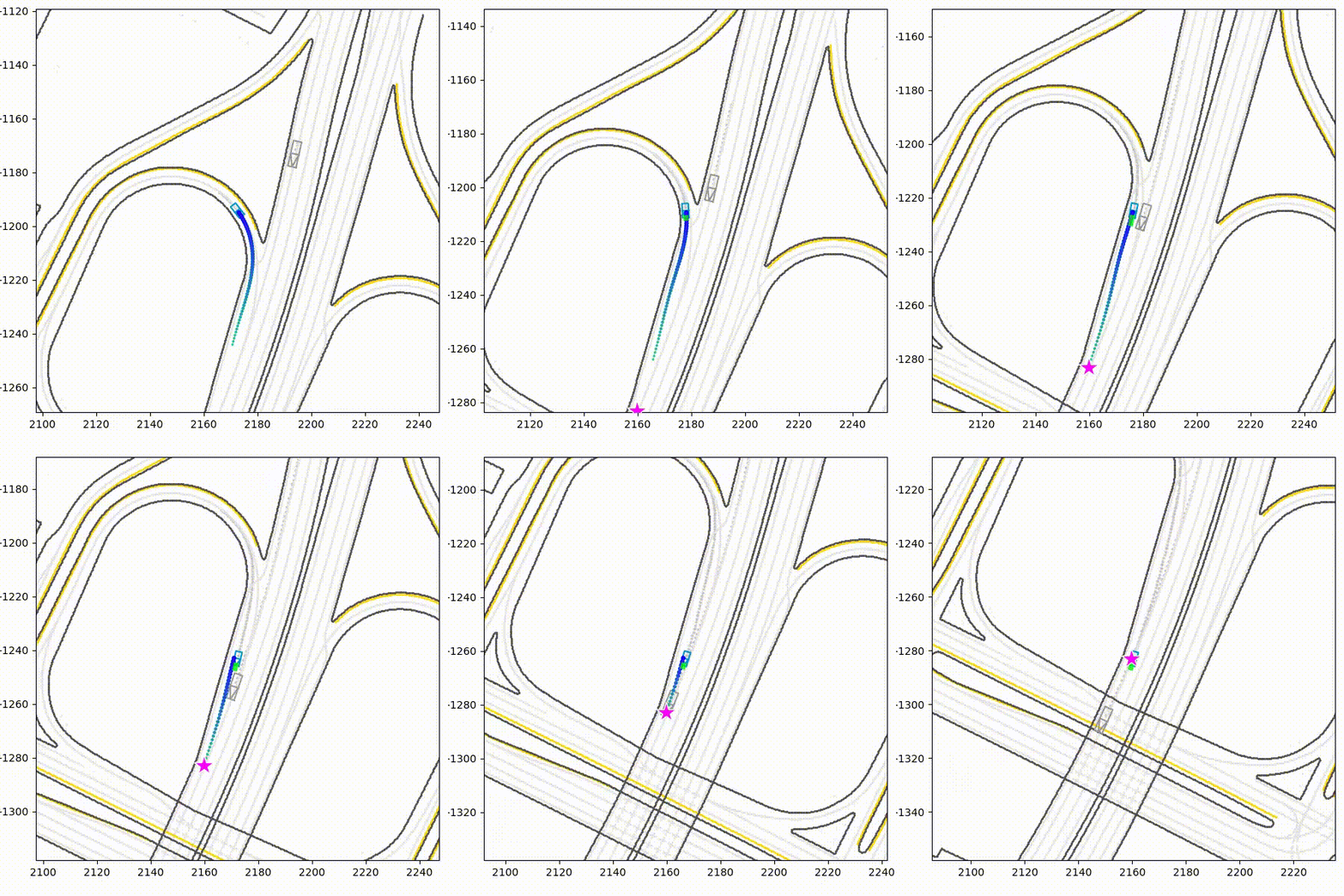
Uncertainty-Weighted: Proactive, successful merge.
Qualitative comparison of data curation strategies in a challenging highway merge.
Mining the Long Tail: Data Curation for Robust Offline RL in AVs
Systematically investigated six data curation strategies (heuristic, uncertainty, behavior-based) to tackle the long-tail problem in autonomous driving, achieving nearly a three-fold reduction in collision rate with uncertainty-based methods.
My Key Contributions:- Developed novel, data-driven criticality metrics (e.g., model disagreement via ensemble scouts) for non-uniform data sampling.
- Designed specialized PyTorch `Dataset` implementations for timestep and scenario-level weighting.
- Conducted large-scale comparative study demonstrating all curation methods significantly outperform uniform sampling.
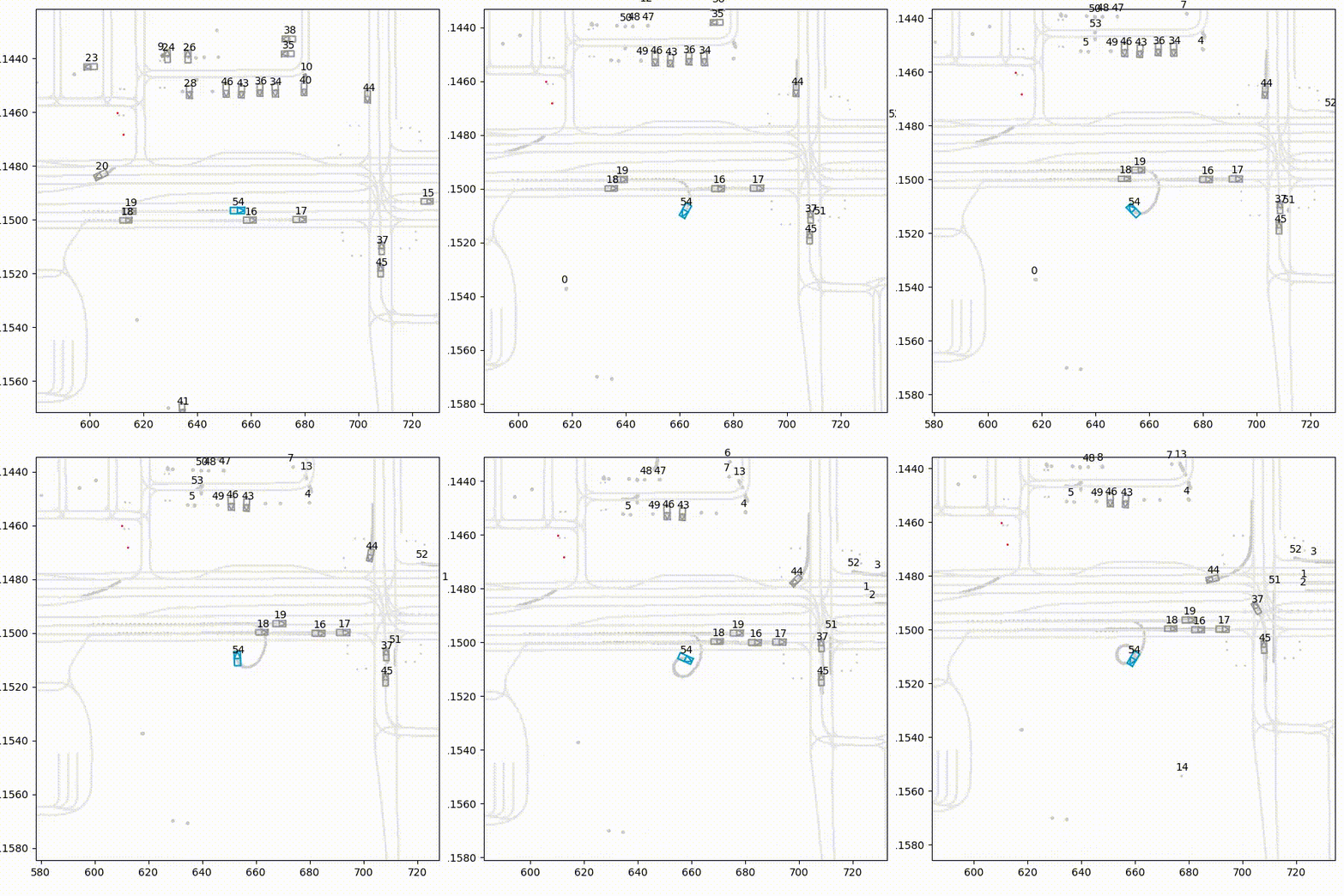
BC-S (MLP): Fails due to complex interactions.
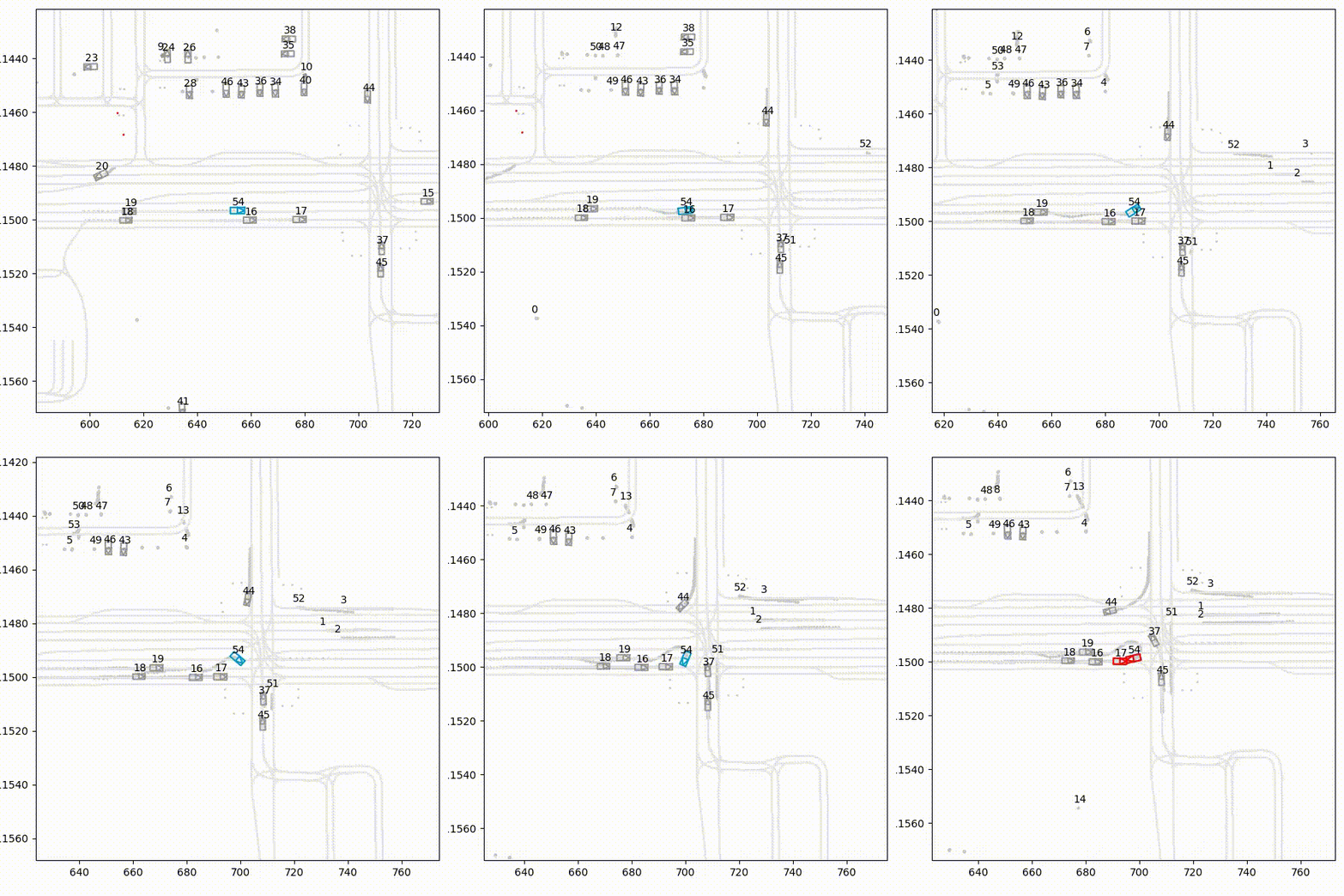
BC-T (Transformer): Brittle, leads to "circling" failure.
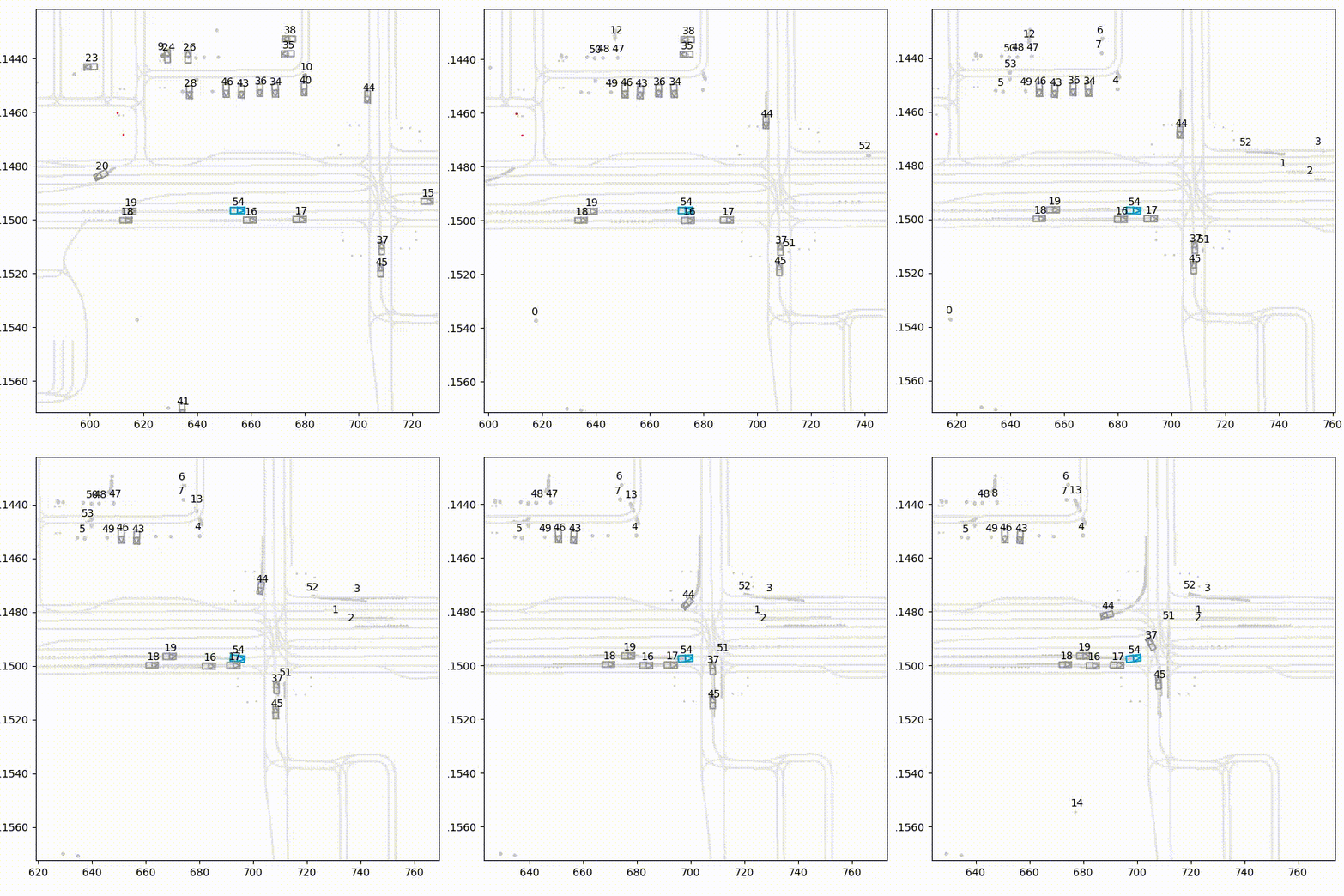
CQL (Offline RL): Robust recovery, successfully navigates.
Qualitative comparison of Behavioral Cloning baselines vs. robust Offline RL (CQL) agent. (Click to expand)
From Imitation to Optimization: Offline Learning for Autonomous Driving
Pioneered an end-to-end pipeline applying state-of-the-art Offline Reinforcement Learning (CQL) to the Waymo Open Motion Dataset, demonstrating significantly superior robustness over Behavioral Cloning baselines for long-horizon AV control.
My Key Contributions:- Engineered a robust, parallelized data processing pipeline for the Waymo Open Motion Dataset.
- Conducted rigorous comparative study, demonstrating CQL's 3.2x higher success rate and 7.4x lower collision rate over Transformer-based BC.
- Designed an effective multi-objective reward function for Offline RL training in autonomous driving.

MARL agents coordinating to cross an intersection safely.
Autonomous Intersection Management
Designed and implemented a MARL system where autonomous vehicles learn to coordinate and safely cross intersections without traffic lights, significantly improving traffic flow.
My Key Contributions:- Designed the end-to-end MARL system architecture, including a novel LSTM-based state encoder.
- Engineered the multi-objective reward function to balance efficiency and safety.
- The final system reduced vehicle travel time by up to 59% in simulation.
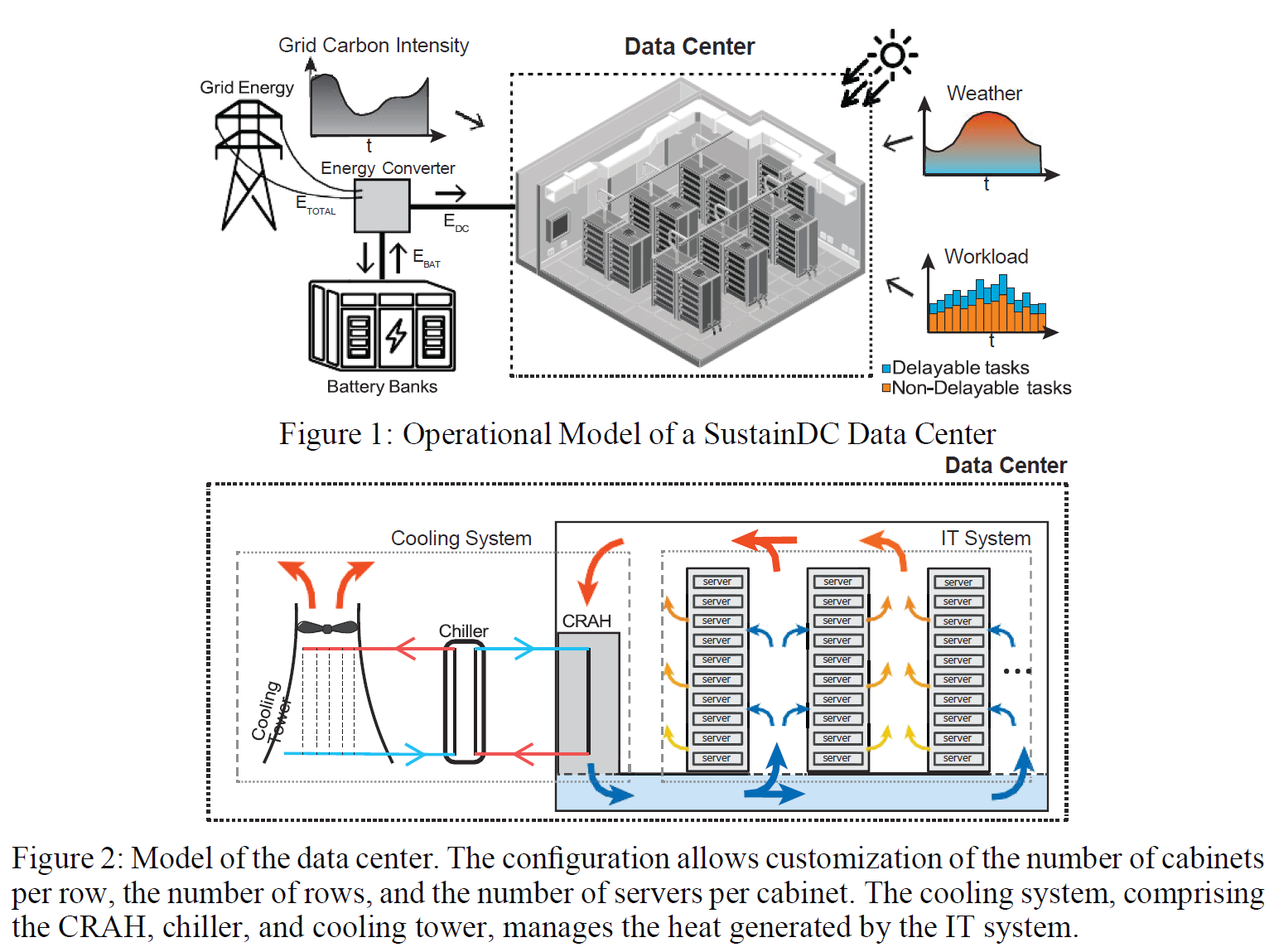
System architecture for the SustainDC benchmark.
SustainDC: A NeurIPS Benchmark
Co-led the creation of an open-source, Gym-compatible benchmark for developing MARL controllers to optimize the energy and carbon footprint of data centers.
My Key Contributions:- Co-led the architectural design and open-source implementation.
- Engineered the Python-based physics models for cooling and power.
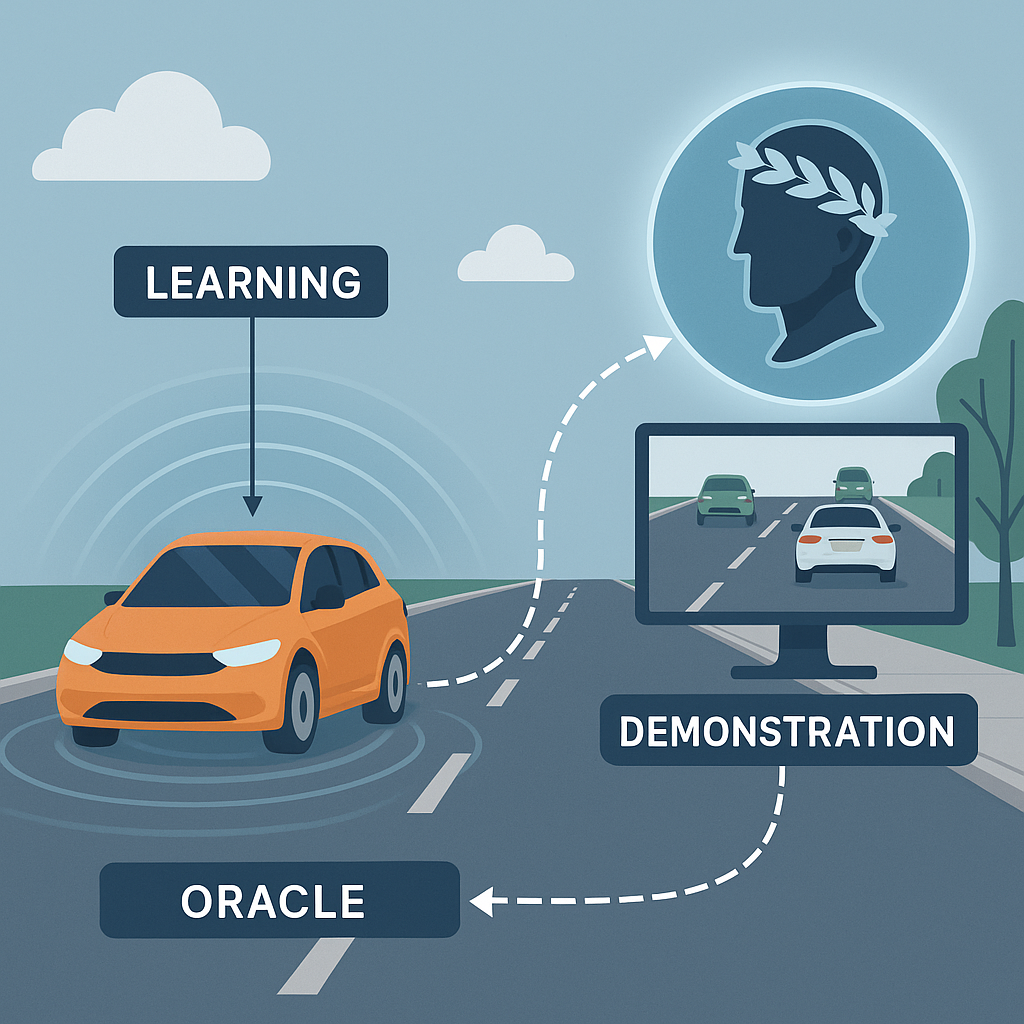
Conceptual framework for Learning from Oracle Demonstrations.
Learning from Oracle Demonstrations (LfOD)
Developed a novel Imitation Learning paradigm to accelerate DRL training by using a learned "Oracle" agent to provide corrective demonstrations to the primary agent.
My Key Contributions:- Engineered the core LfOD methodology from first principles.
- Implemented the TD3fOD algorithm to integrate oracle advice.
- Demonstrated a 5x speedup in training convergence on complex tasks.
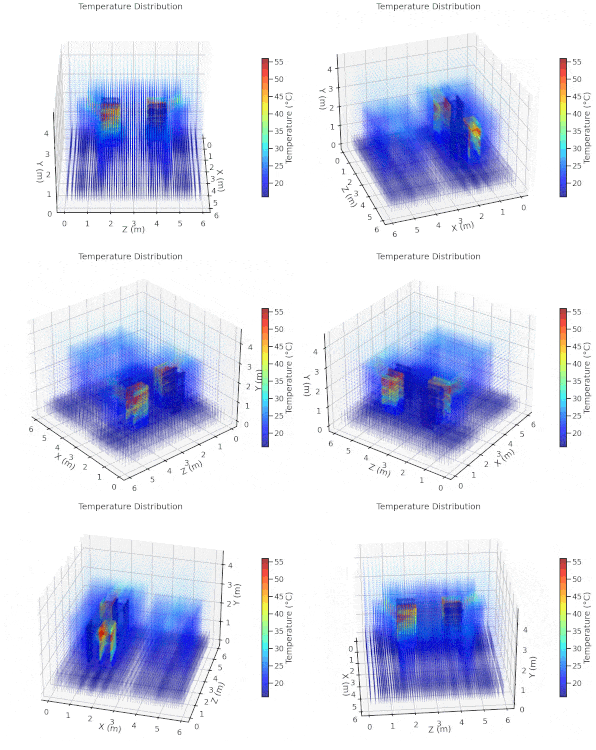
Animation showing the CNN prediction.
3D CNN Surrogate for Accelerating Physics Simulations
Developed a 3D CNN (U-Net) to act as a fast proxy for computationally expensive CFD simulations to predict 3D heat distribution in data centers, achieving a >2800x inference speedup over the original simulator.
My Key Contributions:- Evaluated 3D U-Net architectures for spatial heat prediction in data centers.
- Engineered the data pipeline to process and voxelize raw CFD simulation data.
- Used the surrogate model to optimize the workload placement using a genetic algorithm, reducing the maximum temperature by 7.7% and the energy consumption by 2.5%.
Core Technical Skills
Reinforcement & Decision Science
- Foundations: Sequential Decision-Making, MDPs, Multi-Objective Optimization, Credit Assignment
- Paradigms: Deep RL, Multi-Agent RL (MARL), Hierarchical RL (HRL), Imitation Learning (IL), Behavioral Cloning (BC), Learning from Demonstrations (LfD), Offline Reinforcement Learning (Offline RL)
- Algorithms: Policy Gradient (PPO, A2C), Value-Based (SAC, TD3, Q-Learning, Conservative Q-Learning - CQL)
- Techniques: Model-Based RL, Off-Policy Learning, Exploration Strategies, Reward Function Design & Shaping, Policy Optimization, RLHF, Data-Centric RL (Curation, Sampling, Weighting)
- Applications: Autonomous Driving Planning, Behavior Prediction, Robot Control, System Optimization
Deep Learning & Generative AI
- LLM Agents: Agentic Frameworks, Tool Use, Planning, Fine-Tuning (PEFT, LoRA)
- Architectures: Transformers & Attention, CNNs (U-Net, V-Net), RNNs (LSTM)
- Generative Techniques: Flow Matching (CNF, OT-CFM), Diffusion Models (DDPM), VAEs, Surrogate Modeling
- Frameworks: PyTorch, TensorFlow, Hugging Face Transformers
- Training Techniques: Transfer Learning, Fine-Tuning, Hyperparameter Optimization
- Evolutionary & Search Methods: Genetic Algorithms (for optimization), PSO, Bayesian Optimization
High-Performance ML Engineering
- Distributed Systems: Large-Scale Training (Ray: RLlib, Tune), Parallel Computing, Distributed Data Processing
- Infrastructure: Scalable ML Pipelines, MLOps Concepts, HPC Environments, High-Throughput Data Loaders
- Performance: Model Evaluation & Benchmarking, Debugging Large ML Codebases, Performance Profiling
Simulation & Embodied AI
- Environment Development: Digital Twins, World Models, (Gymnasium, PettingZoo), Waymax Simulator
- Robotics Concepts: Motion & Behavioral Planning, Control Systems, Perception Pipeline, Trajectory Prediction, Safety & Robustness
- Tools & Data: Physics Simulators (SUMO, CARLA), Waymo Open Motion Dataset (WOMD), Synthetic Data Generation, Real-World Data Integration, Large-Scale Datasets
Expert In
Python, PyTorch, Ray (RLlib, Tune)
Proficient With
NumPy, Pandas, Scikit-learn, Stable Baselines3, Docker, Git, Linux, Waymo Open Motion Dataset (WOMD), Waymax, C++ (Basic)
Selected Publications
Conditional Flow Matching for Continuous Anomaly Detection in Autonomous Driving on a Manifold-Aware Spectral Space
arXiv preprint, February 2026
Semantic-Drive: Democratizing Long-Tail Data Curation via Open-Vocabulary Grounding and Neuro-Symbolic VLM Consensus
TMLR AcceptedAccepted by Transactions on Machine Learning Research (TMLR), April 2026
Efficient Virtuoso: A Latent Diffusion Transformer Model for Goal-Conditioned Trajectory Planning
arXiv preprint, August 2025
Mining the Long Tail: A Comparative Study of Data-Centric Criticality Metrics for Robust Offline Reinforcement Learning in Autonomous Motion Planning
arXiv preprint, Aug 2025
From Imitation to Optimization: A Comparative Study of Offline Learning for Autonomous Driving
arXiv preprint, July 2025
SustainDC: Benchmarking for Sustainable Data Center Control
Advances in Neural Information Processing Systems (NeurIPS), 2024
Learning From Oracle Demonstrations—A New Approach to Develop Autonomous Intersection Management...
IEEE Access, 2022
Multi-Agent Deep Reinforcement Learning to Manage Connected Autonomous Vehicles at Tomorrow's Intersections
2026 IEEE Best Land Transportation Paper AwardIEEE Transactions on Vehicular Technology, Vol. 71, No. 7, pp. 7033–7043, July 2022
N-CRITICS: Self-Refinement of Large Language Models with Ensemble of Critics
NeurIPS 2023 Workshop on Robustness of Foundation Models
For a full list of publications, please visit my Google Scholar profile.